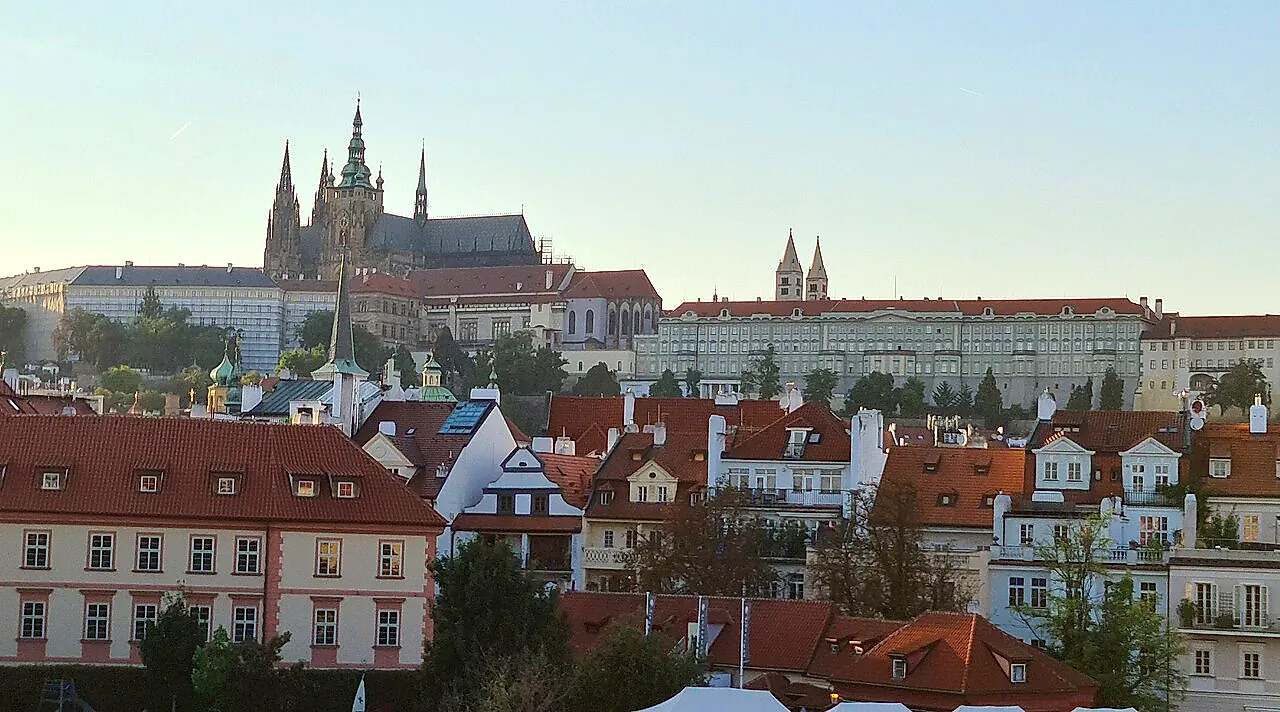
Prague · Hradčany · St Vitus Cathedral, Old Royal Palace, Golden Lane
Prague Castle: tickets, hours and what to see
The hilltop castle complex above the Vltava: St Vitus Cathedral, the Old Royal Palace, St George’s Basilica and Golden Lane. Opening hours, what is free, which tickets exist and how to get there.
Today
Opening hours for every month are on the Opening hours page.
Checked against the official website on 24 October 2026 · Official source
In short
- The Main circuit covers the Old Royal Palace, St George’s Basilica, Golden Lane and St Vitus Cathedral. According to the Castle’s ticket information, read on 24 October 2026, the ticket is valid for two days and each building can be entered once. The products on our tickets page have their own terms, shown on each card.
- The grounds are open every day from 6:00 to 22:00, and the official visitor regulations say that entrance to the complex is free apart from the buildings open to the public. The historic buildings are open from 9:00 to 17:00 from 1 April to 31 October and from 9:00 to 16:00 from 1 November to 31 March, and are closed on 24 December. Last entry is published only for the cathedral (16:40, or 15:40 in winter) and the Great South Tower (17:30, or 16:30 in winter).
- St Vitus Cathedral cannot be entered for free: the official cathedral page, read on 24 October 2026, says the free part has been closed since 25 October 2023 until further notice, so you need a circuit ticket to go in. The Great South Tower, the Permanent exhibitions circuit and the Picture Gallery are separate from the Main circuit.
- Photography is banned in four places: the exhibition The Story of Prague Castle, the Cathedral Treasury, the Powder Tower and the Picture Gallery.
- The tickets page lists what our partner, a third party, sells for the Castle and its surroundings: entry tickets, tickets with an audio guide or an introduction, guided tours, combined tickets, concerts at Lobkowicz Palace, city passes and a river cruise. Each card states what the product includes.
St Vitus Cathedral
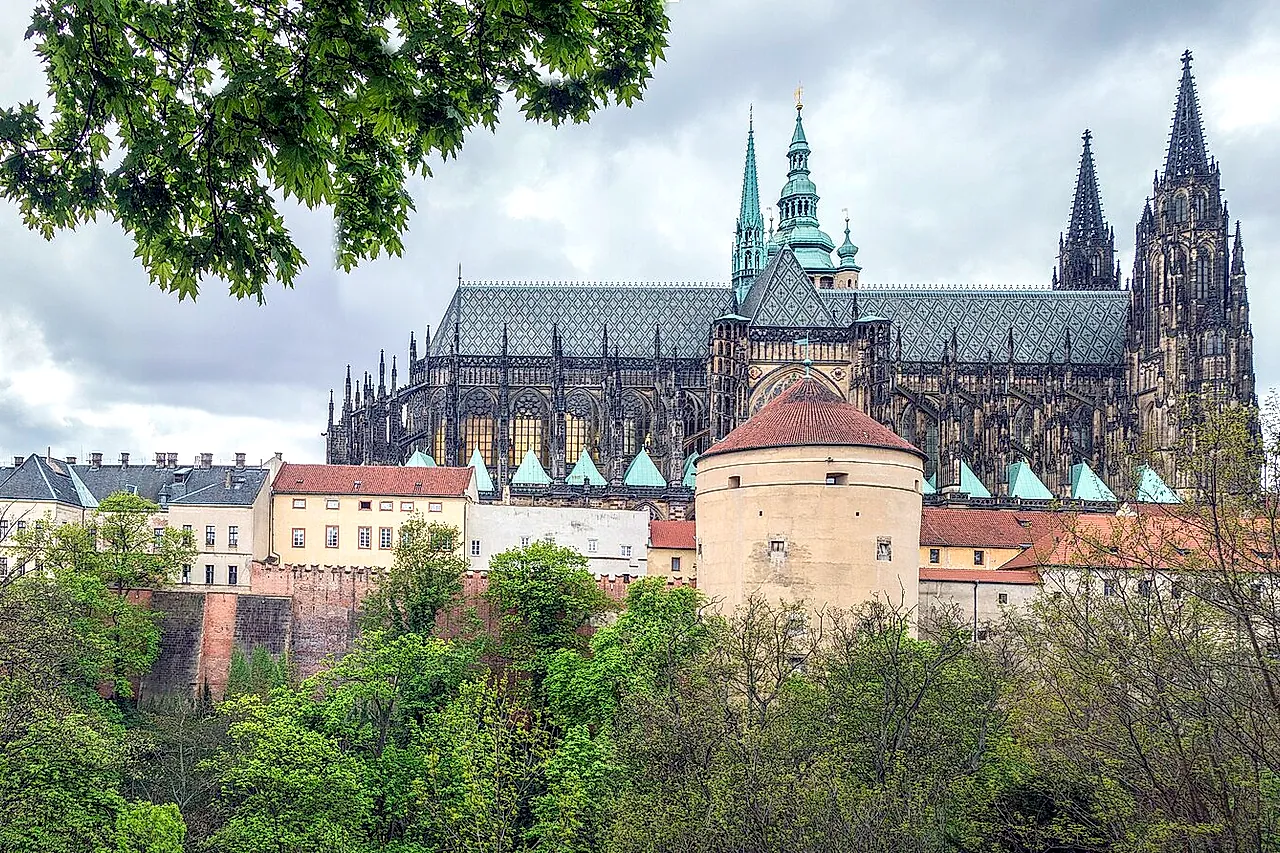
The official site calls St Vitus Cathedral the largest and most important church in Prague. Bohemian kings and queens were crowned here, and it holds the tombs of patron saints, rulers, nobles and archbishops. It is the third church on the site: Prince Wenceslas had a Romanesque rotunda founded here around 925, and Charles IV began the Gothic cathedral in 1344, with Matthias of Arras and then Peter Parler as the first builders. Work stopped in 1419 during the Hussite wars. It was completed in the neo-Gothic style from the second half of the 19th century, and the official site gives 1929 as the year of its solemn consecration.
Baedeker’s 1911 handbook, written while the work was still going on, records that the task of completing the cathedral was resumed in 1867 (p. 304). The Wenceslas Chapel, according to the same handbook, is inlaid with Bohemian semi-precious stones (p. 305). The official site says the Crown Jewels are kept behind a door in the south-west corner of the chapel, and that the Crown Chamber and the chapel are not open to visitors. Copies of the Crown Jewels can be seen in the Old Royal Palace.
The Great South Tower
The tower beside the cathedral is almost 100 metres high and has its own ticket. The official site gives 287 steps to the top, with views over Prague and the bells. The largest bell, Zikmund, is the biggest in the country according to the official site, cast in 1549 and weighing about 15 tonnes.
Peter Parler began the tower at the end of the 14th century, and it was not finished in the Gothic style: the gallery and spire date from the 16th century. Last entry is 17:30 (16:30 in winter), and the tower is not accessible to visitors with reduced mobility.
The Old Royal Palace and Vladislav Hall
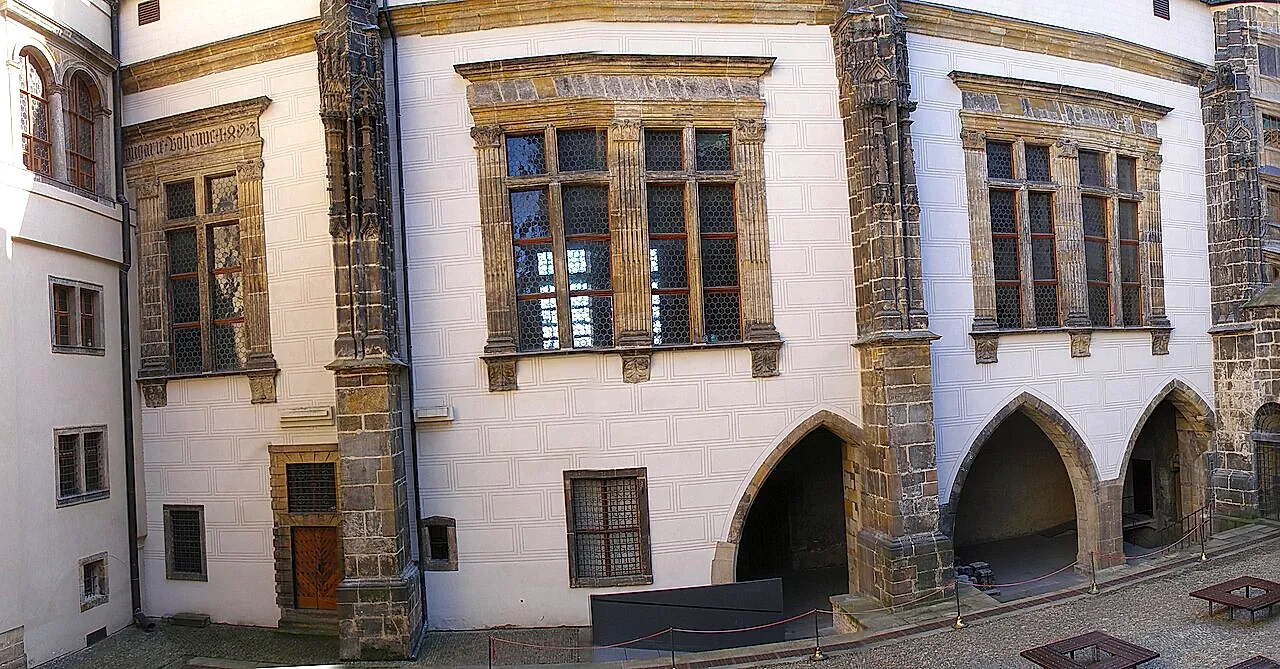
The palace grew over centuries: a Romanesque stone palace in the 12th century, a Gothic enlargement under Charles IV, and, after 1483, the last great rebuilding for Vladislav Jagiellon. Its centrepiece is Vladislav Hall, designed by Benedikt Ried, which combines late Gothic with elements of the Renaissance. It was used for coronations, banquets, tournaments and markets, and visitors leave by the Riders’ Staircase, built so that knights could ride in on horseback for the jousts.
Lützow, in The Story of Prague (1902, p. 147), quotes a chronicler of the time who wrote that there was “no building like it in all Europe”, none “longer, higher and broader”, and yet with no pillars. In the Bohemian Chancellery next door, according to the official site, two governors and a scribe were thrown from a window into the castle ditch in 1618; Baedeker (1911, p. 304) dates it 23 May and calls it the Defenestration of Prague, the immediate occasion of the Thirty Years’ War.
St George’s Basilica
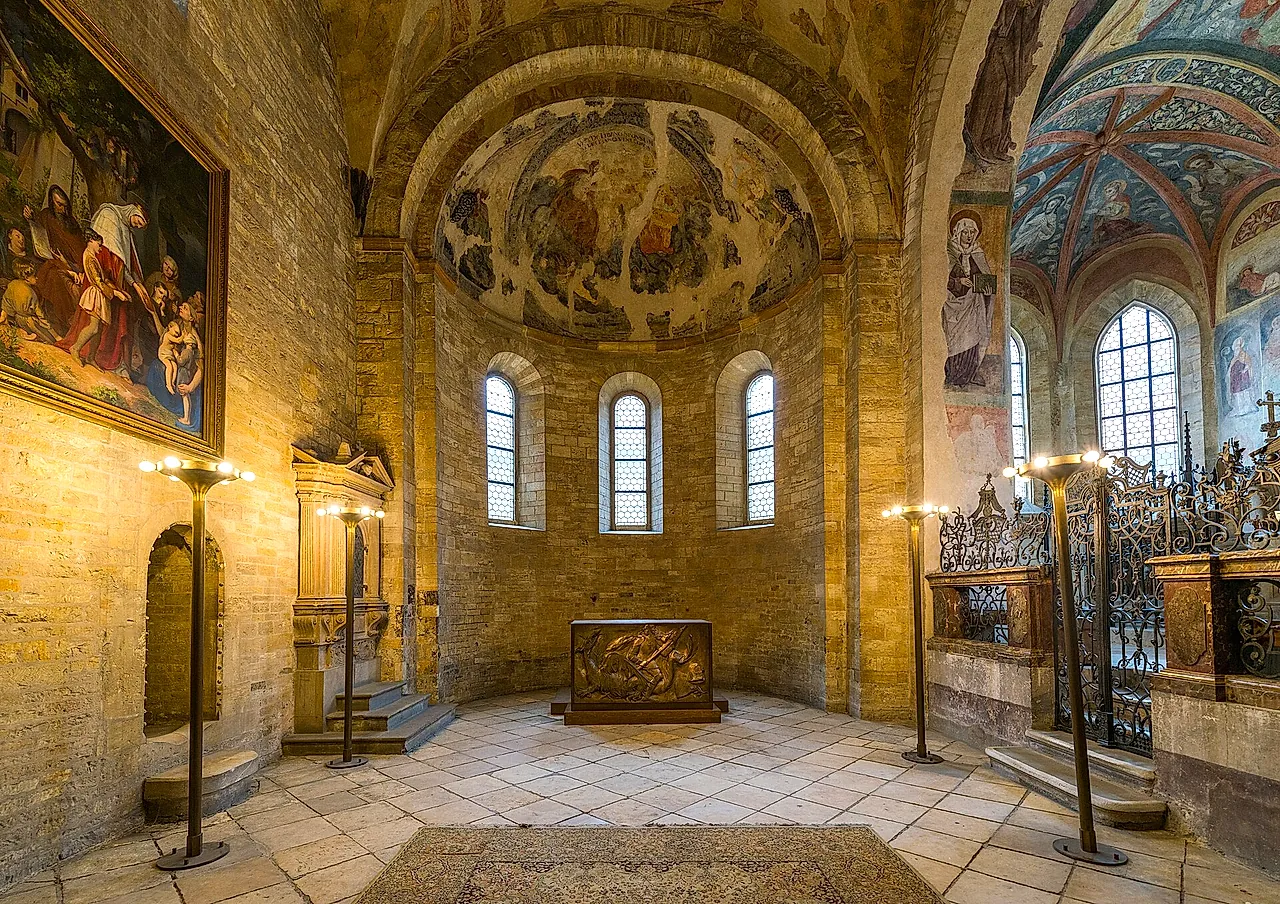
The official site describes St George’s as the second church at the Castle. The first church was founded around 920 by Prince Vratislav I, and a convent of Benedictine nuns was added in 973. The present Romanesque look, with an apse and two towers, dates from after the fire of 1142, and the interior holds the tombs of the Přemyslid rulers. Lützow called it the finest building in that style in Bohemia (1902, p. 194).
The basilica was restored between 1887 and 1908 to bring back its Romanesque appearance, and the former convent now hosts short-term exhibitions.
Golden Lane and the Daliborka Tower
The small coloured houses of Golden Lane date from the end of the 15th century, when the new northern fortifications were built. They housed castle marksmen, families and goldsmiths, and the last tenants left in 1953. Franz Kafka lived in house no. 22 during the First World War, and the painted facades follow a design by Jiří Trnka from the 1950s.
A staircase in house no. 12 leads to a terrace on the Daliborka Tower, a cylindrical gun tower of the Jagiellonian period whose lower floor was a prison. The first and best-known prisoner, in 1498, was the knight Dalibor of Kozojed. The official site does not mention alchemists in the lane: it links the alchemists of Rudolf II to the Powder Tower. The defence corridors near the Daliborka are not accessible to visitors with reduced mobility.
Courtyards and the changing of the guard
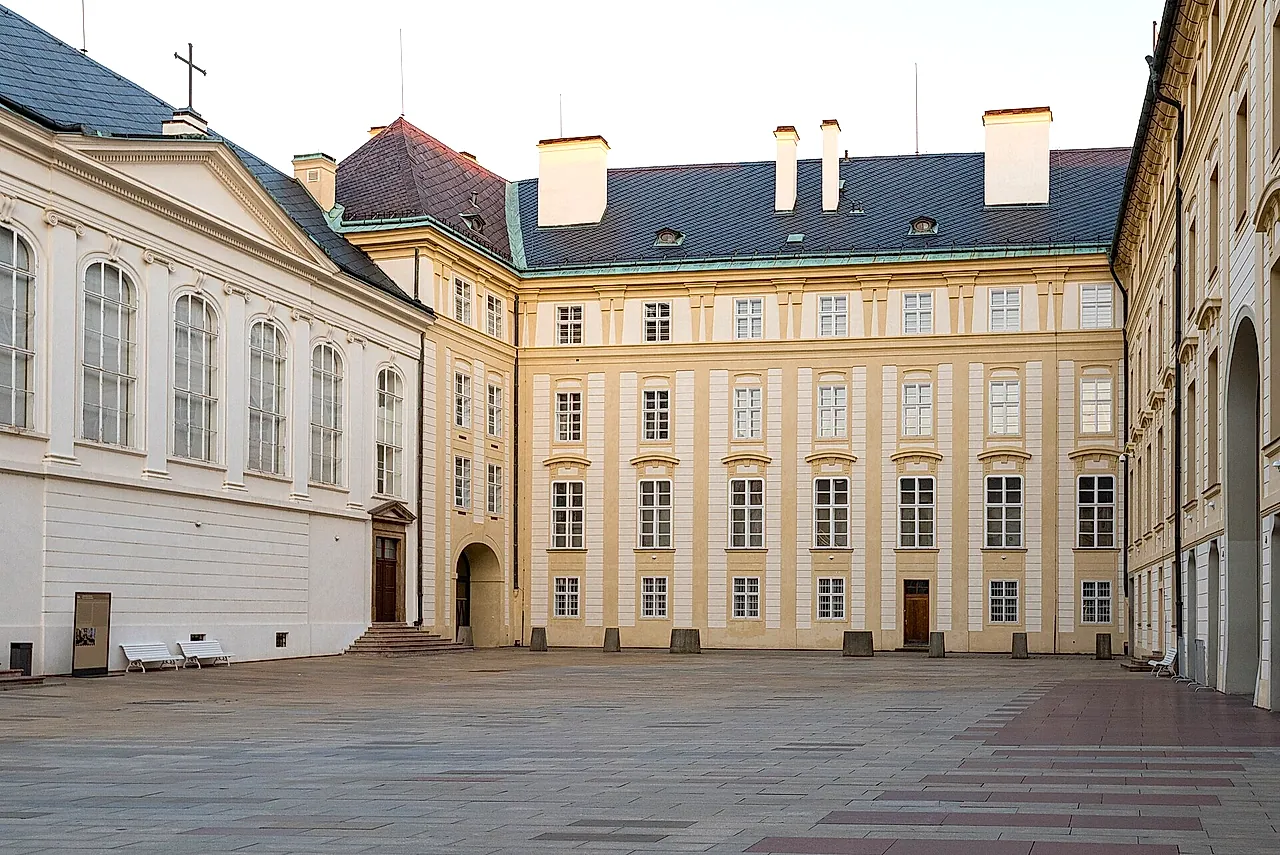
The courtyards and streets of the complex need no ticket. You enter at designated points with a security check: the official site describes random preventive searches by the Police and the Castle Guard, and it asks visitors not to bring large baggage. Weapons, drones, bicycles and scooters are banned, and visitors must not come within half a metre of the guard at the gates.
The official site mentions a ceremonial changing of the guard at noon in the First Courtyard. We could not confirm a current timetable, and the ceremony can be cancelled, so check the official page of closures. The Castle Guard itself was founded on 6 December 1918, and its historical uniforms from 1929 take their inspiration from the Czechoslovak legions.
What the Permanent exhibitions ticket covers
The Permanent exhibitions circuit covers The Story of Prague Castle, the Castle Guard Exhibition, the Picture Gallery and the Rosenberg Palace. The Story of Prague Castle, in the Gothic level of the Old Royal Palace, tells the thousand-year history of the site. The Castle Guard Exhibition is in the Powder Tower (Mihulka), a gun tower of the late 15th century that, in the days of Rudolf II, was used as lodgings for the castle’s alchemists.
The Picture Gallery, in the Second Courtyard, shows over 100 of the best paintings from a collection of about 4,000, which the official site calls the oldest continuously existing collection of paintings in the country. We could not read the official page of the Rosenberg Palace, so we do not describe it. Photography is banned in The Story of Prague Castle, in the Powder Tower and in the Picture Gallery.
Of Rudolf II’s Prague, Lützow cites an epigram: the city, wooden in the time of Libussa, became marble, and “golden under Rudolph” (1902, p. 103).
Gardens and the Royal Summer Palace
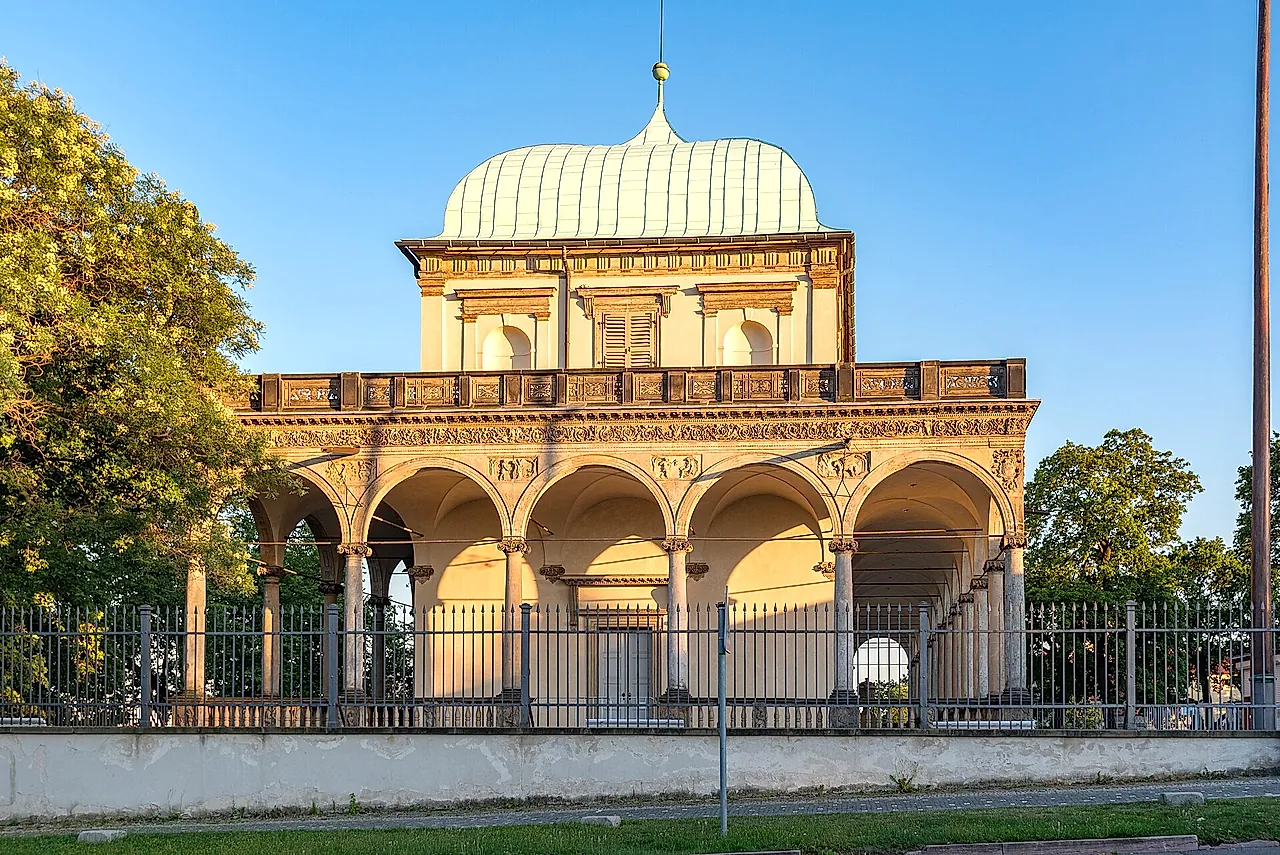
The Royal Garden was founded in 1534 for Ferdinand I. Beside it stands the Royal Summer Palace, a Renaissance pavilion of the mid-16th century with a bronze Singing Fountain by Tomáš Jaroš (1564-68). The South Gardens were designed by Plečnik in the 1920s and renewed in 2012, and the Garden on the Bastion is also his work. Baedeker noted in 1911 that the Royal Garden was then closed to the public (p. 306).
The Royal Garden, the Stag Moat and the South Gardens follow seasonal hours and are closed from 1 November to the end of February; see the Opening hours page. The Garden on the Bastion is open during the hours of the complex.
Visitor guide
Prague Attraction Tickets: Castle, Orloj, Petřín, Žižkov
How to choose a Prague ticket: entry, audio guide, tour, combined, concert, city pass or cruise, plus hours and access rules for the five main sights.
Prague Castle Tickets: Main Circuit, Audio Guide, Tours
Which Prague Castle ticket to choose: what the Main circuit covers, validity, free areas, hours, and the entry, audio guide, tour and combined options.
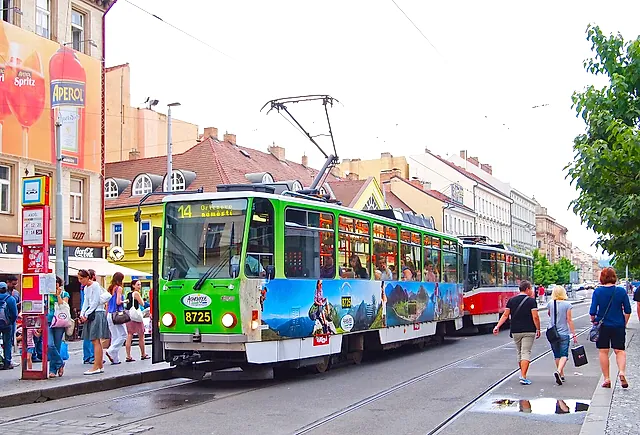
Getting Around Prague: Airport, PID Tickets, Trams to the Castle
How to reach Prague's main sights: airport buses and metro, PID ticket prices, tram 22 to the Castle, Petřín funicular, Žižkov and the Museum of Communism.